| Author |
Message |
|
Jeffrey Mallia
|
 Posted: Mon 24 May, 2010 10:54 am Post subject: My new sword Posted: Mon 24 May, 2010 10:54 am Post subject: My new sword |
 |
|
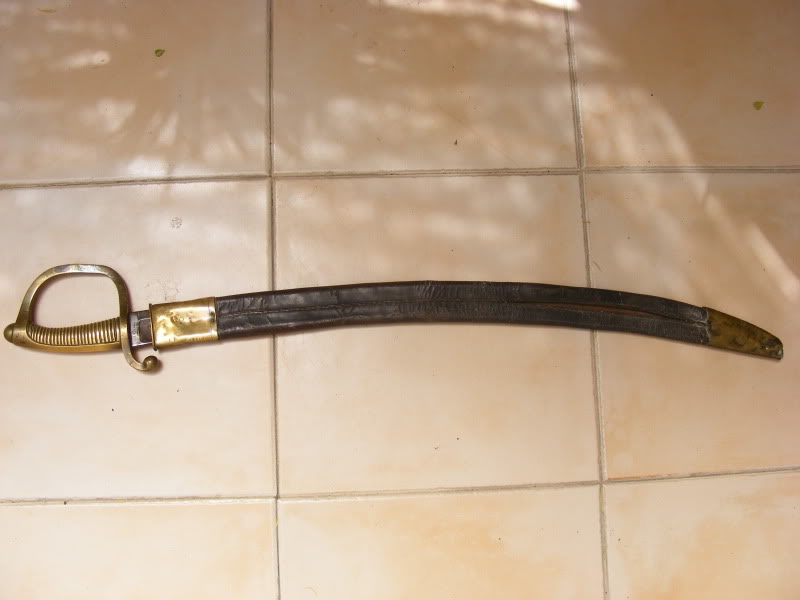
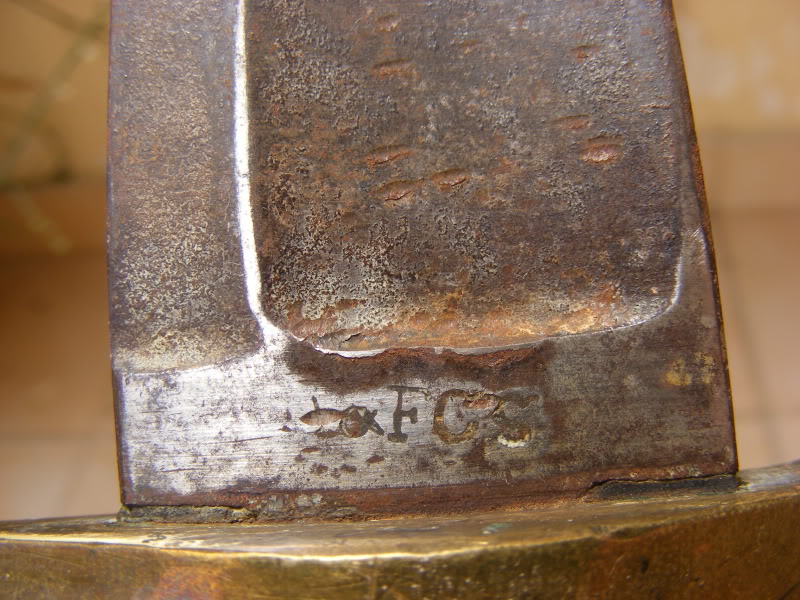
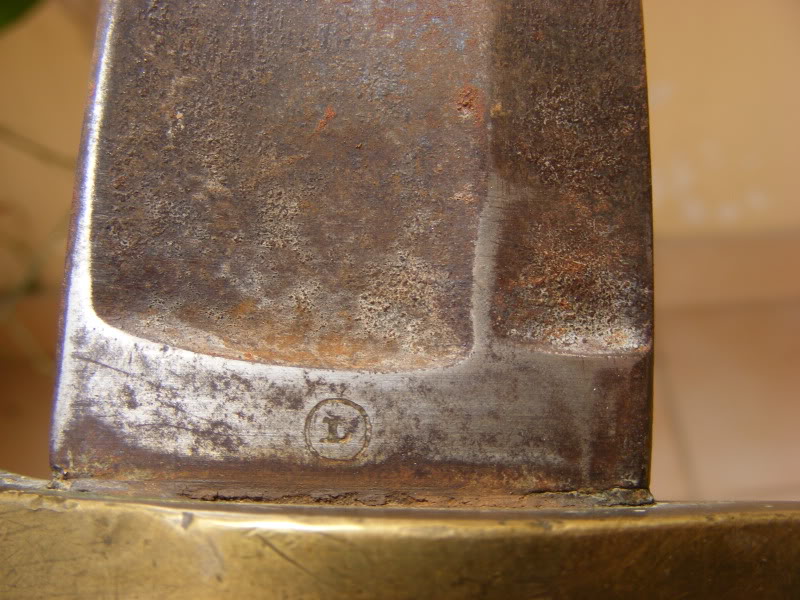
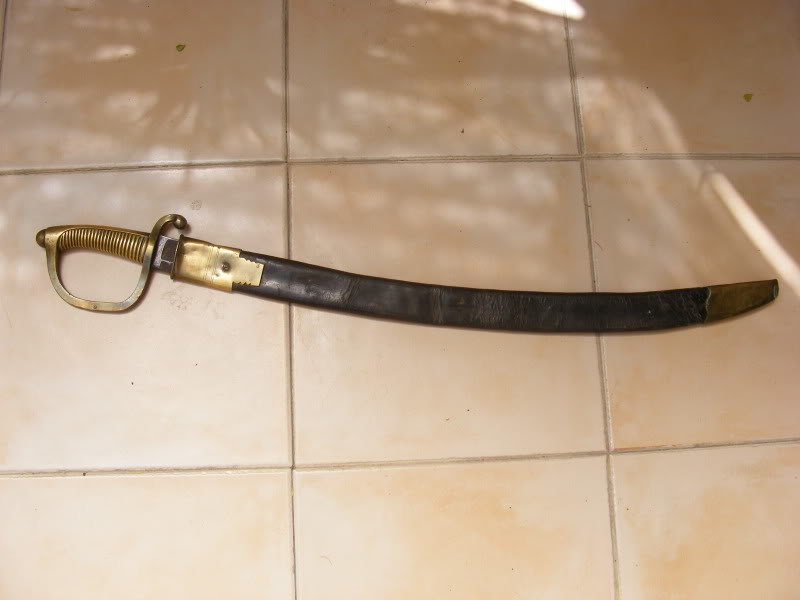
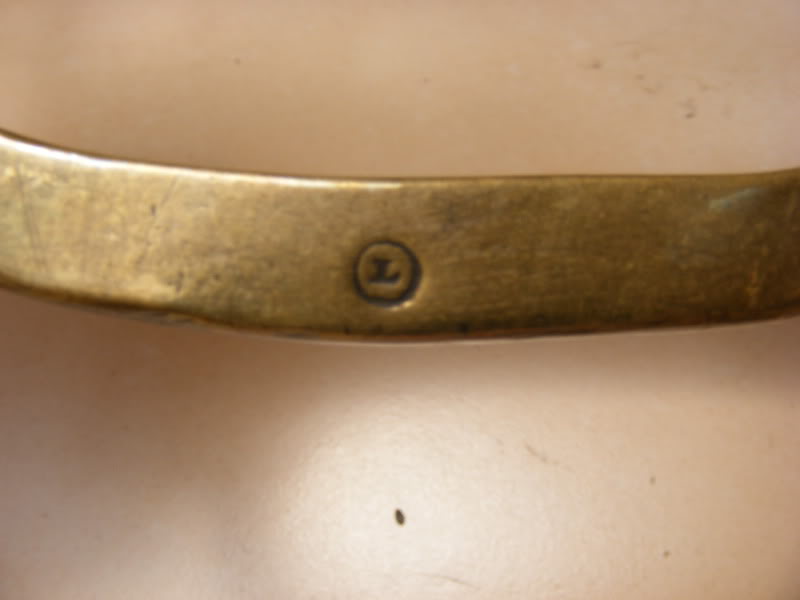
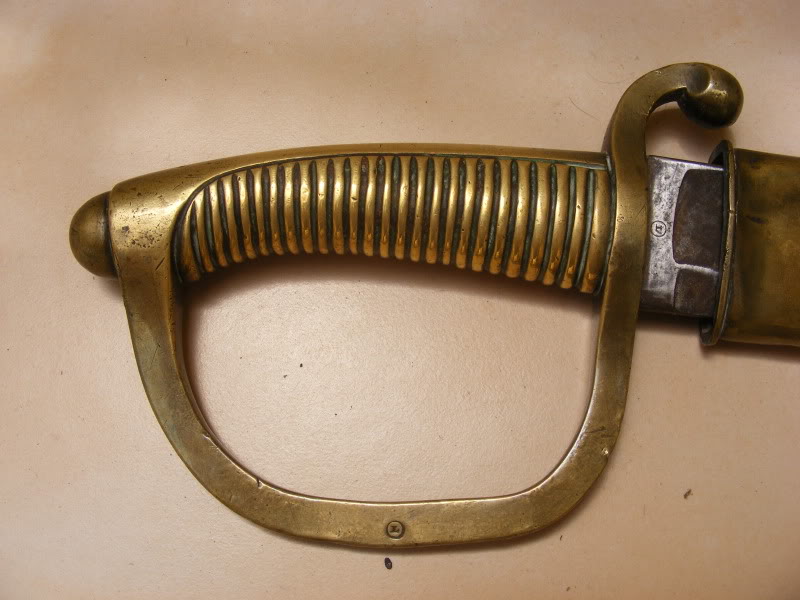
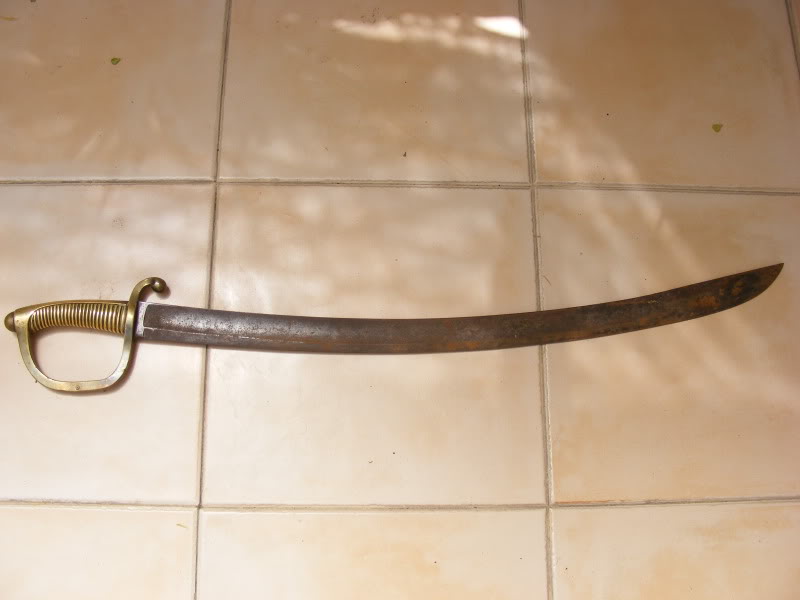
Hi to all. I have recently acquired a mameluke sword but have difficulty in giving it a date of production. It has some numerals on the blade as well as the scabbard namely an L on the blade & the same L, repeated on the scabbard. Also it has the words FCS and the pattern of a fish. The sword cannot be dismantled in any way so I cannot check its tail or anything inside the pommel. It also appears to have had a sharp edge that now is pitted. The scabbard is made out of leather which need badly some repair too. Can someone help me identify this please?
Thanks.
|
|
   |
 |
|
Sam Barris
|
| Posted: Mon 24 May, 2010 11:16 am Post subject: |
|
|
French infantry saber, I believe. I think it was called a briquet. Nineteenth Century, if memory serves.
Pax,
Sam Barris
"Any nation that draws too great a distinction between its scholars and its warriors will have its thinking done by cowards, and its fighting done by fools." —Thucydides
|
|
 |
|
|
Jeffrey Mallia
|
| Posted: Mon 24 May, 2010 11:30 am Post subject: |
|
|
|
It might be far fetched but do you know of any method whereby I can get to know some more precise dating please like 18...?
|
|
|
|
|
|
Sam Barris
|
| Posted: Mon 24 May, 2010 11:47 am Post subject: |
|
|
Yes.
www.google.com 
Heh. Sorry, that was a bit snarky. But a cursory Google search for "French infantry briquet" produced this thread over at another forum.
http://swordforum.com/forums/showthread.php?t=99708
Didn't read it myself, but it looks as though the owner of that sword is/was on a similar quest. Maybe you could compare notes. I don't have more information off the top of my head. This weapon is pretty far outside my sphere of interest. Seems like a nice antique find, though.
Pax,
Sam Barris
"Any nation that draws too great a distinction between its scholars and its warriors will have its thinking done by cowards, and its fighting done by fools." —Thucydides
Last edited by Sam Barris on Mon 24 May, 2010 11:53 am; edited 1 time in total
|
|
|
|
|
|
Sam Barris
|
| Posted: Mon 24 May, 2010 11:52 am Post subject: |
|
|
Closer to home...
http://www.myArmoury.com/talk/viewtopic.php?p=120898

Pax,
Sam Barris
"Any nation that draws too great a distinction between its scholars and its warriors will have its thinking done by cowards, and its fighting done by fools." —Thucydides
|
|
|
|
|
|
Sam Barris
|
| Posted: Mon 24 May, 2010 12:06 pm Post subject: |
|
|
Another tidbit that my reading has uncovered is that the number of ribs on the grip can be as revealing of origin and date as the markings on the hilt and blade. This particular weapon seems to have been copied by many countries throughout the early 1800s. It may or may not be a French 1816 model. It could be later, or Turkish even! So you've still got a hunt on your hands, but hopefully there are now a few helpful marks on your map, Legend of Zelda style. 
Pax,
Sam Barris
"Any nation that draws too great a distinction between its scholars and its warriors will have its thinking done by cowards, and its fighting done by fools." —Thucydides
|
|
|
|
|
A. Spanjer

|
| Posted: Tue 25 May, 2010 4:48 am Post subject: |
|
|
| Sam Barris wrote: | Yes.
www.google.com
Heh. Sorry, that was a bit snarky. But a cursory Google search for "French infantry briquet" produced this thread over at another forum.
http://swordforum.com/forums/showthread.php?t=99708
Didn't read it myself, but it looks as though the owner of that sword is/was on a similar quest. Maybe you could compare notes. I don't have more information off the top of my head. This weapon is pretty far outside my sphere of interest. Seems like a nice antique find, though. |
I'm the owner of the sword in that Sword Forum thread. I've not got a positive identification on mine yet, but here's what I've found out so far:
Swords like this weren't just used by the French. They were actually used by most major European nations during the early 19th century. Unfortunately, they all appear very similar.
The French models I've seen all have 28 ribs. Mine has 29, yours has (I think) 26.
Mine unfortunately has no scabbard, but yours does. Perhaps you can compare scabbard designs of various European countries? This could give you a clue as to its origins.
Na sir 's na seachain an cath.
|
|
|
|
|
|
Jonathan Hopkins
|
| Posted: Tue 25 May, 2010 5:34 am Post subject: |
|
|
Another important feature to look at is the blade itself. Jeffrey's sword has a fullered blade whereas the sword linked at SFI has a plain blade. You may want to cross post this in the antique section at SFI to get more opinions.
Good luck!
Jonathan
|
|
|
|
|
|
Jeffrey Mallia
|
| Posted: Tue 25 May, 2010 12:20 pm Post subject: |
|
|
|
On a closer inspection I found a third L marking on the inside of the hilt. I can't find any leads as to what FCS might mean or what the marking L stands for. Also my sword does not seem to have any number (serial?) whatsoever. Can a used military sword like this be without one or did they all have to have a number? On a side note, why was the fuller used & does this make it more probable that it is an authentic military used weapon or rather less likely so? Also to sum things up, in theory I might have a sword which at least is more than a hundred years old approximately? This could explain the iron blade and the fact it cannot be dismantled as the last bit of the tail is hammered over the pommel. Thanks to all for your invaluable help as I feel lost on this subject.
|
|
|
|
|
|
Jeffrey Mallia
|
| Posted: Tue 25 May, 2010 1:09 pm Post subject: |
|
|
I know you said my sword could not be French but I discovered that a certain François, Louis Lobstein who was a CONTRÔLEUR & RÉVISEUR with Klingenthal from 1804 - 1829 used to mark the swords with an L marking which is very similar to the marking my blade shows on the hilt (2 marking) and on the blade.
This is the link from where I found the information (please scroll down):
http://klingenthal.chez.com/marquages_etat.htm
Could there possibly be any connection whatsoever?
|
|
|
|
|
|
Karl Agius
Location: Malta Joined: 16 Jun 2012
Posts: 2
|
| Posted: Sat 16 Jun, 2012 2:35 am Post subject: |
|
|
Had the opportunity to look at this sword today. The fish sign before the FCS mark looks like the bottom of an ampersand sign, and there's a line with what looks like a bit of serif showing just before that (just under the ding). Possibly A&FCS? I've seen references to this manufacturer online but have no other information about them.
A third L mark also appears on the back of the hilt at the base of the curl (just above where the thumb would go).
I'm not at all convinced that the scabbard belongs to this weapon; it doesn't fit it completely, even accounting for warping in the leather. The style of scabbard also looks like that used for British Police swords, which don't look like this at all.
|
|
|
|
|
|
Norman McCormick
|
| Posted: Sat 16 Jun, 2012 4:02 am Post subject: |
|
|
Hi,
Here's another for comparison. Made in Solingen by Gebruder, Weyersberg for the Berne Arsenal. Infantry Orderly model 1843.
Regards,
Norman.
|
|
|
|
|
|
Karl Agius
Location: Malta Joined: 16 Jun 2012
Posts: 2
|
| Posted: Sat 16 Jun, 2012 4:22 am Post subject: |
|
|
Thank you, Mr. McCormick The variations on this pattern are endless!
Found a little bit more information regarding A&FCS at http://www.blankwaffen-forum.de/index.php?pag...#post17858 - for some reason all my searches kept turning up empty until I tried in German. The post says that the manufacturer (A.&F.C.Schimmelbusch) operated in Solingen between 1850 and 1851.
The Old Swords database item 888190 ( http://www.oldswords.com/database/viewItem.php?id=888190 ) is very similar to the one in this thread - German infantry 1811 model, circa 1811 - 1864. Bit confused about the dating as I thought the French pattern these briquets are based on was dated 1813?
|
|
|
|
|
Morgan Butler

|
| Posted: Thu 11 Dec, 2014 9:36 am Post subject: |
|
|
I also believe that the blades that are fullered and longer than the usual 23 inches makes them NCO swords.
inkothemgard!
|
|
|
|
|
Morgan Butler
|
| Posted: Fri 12 Dec, 2014 9:21 am Post subject: |
|
|
Upon further research my prior posting was probably erroneous. My experience with briquets was that they were usually 23 inches and un-fullered wedge like blades. Now I am finding all kinds of blade variations....
inkothemgard!
|
|
|
|
|
|
|







 This is a standard topic