It's true that there aren't a great deal of daggers on the market representing the 14th century. A&A's rondel dagger is inspired by late 14th century period art, so there's one. :)
From our Rondel Dagger spotlight:
The top one is identified as being from 14th century:
[ Linked Image ]
Both of these are from the 14th century:
[ Linked Image ]
Based on period art, effigies, and brasses, baselards may have been more prevalent in the 14th century than rondel daggers among the knightly class. Looking through some books with effigies and brasses here's the dagger breakdown from some 14th century monuments:
No dagger: 16
Baselard-esque: 7
Rondel dagger: 6, some of them are hard to tell
Ballock dagger: 3
Other/undefinable/quillon: 6
Now, ~40 monuments doesn't mean much in the grand scheme of things, of course. It would seem, based more on surviving historical examples, that quillon daggers and baselards may have been more popular in the 14th century.
In terms of trends and evolution, that's a tough one. Not every brass/effigy shows a dagger, as seen above. Not many historical examples survive. I'd say the rondel daggers where only the grip is a rondel and the pommel some other shape seem to be more of a 14th century thing. The rondels, especially the one on the opposite end of the grip from the blade, seem to get larger as time passes.
The few surviving ballock daggers I've seen seem to be less well-developed in the ballocks than later examples, though period art differs.
Below are some pictures of 14th century ballock daggers and rondel daggers:
 Attachment: 16.69 KB

14th century German ballock dagger.
From our Rondel Dagger spotlight:
The top one is identified as being from 14th century:
[ Linked Image ]
Both of these are from the 14th century:
[ Linked Image ]
Based on period art, effigies, and brasses, baselards may have been more prevalent in the 14th century than rondel daggers among the knightly class. Looking through some books with effigies and brasses here's the dagger breakdown from some 14th century monuments:
No dagger: 16
Baselard-esque: 7
Rondel dagger: 6, some of them are hard to tell
Ballock dagger: 3
Other/undefinable/quillon: 6
Now, ~40 monuments doesn't mean much in the grand scheme of things, of course. It would seem, based more on surviving historical examples, that quillon daggers and baselards may have been more popular in the 14th century.
In terms of trends and evolution, that's a tough one. Not every brass/effigy shows a dagger, as seen above. Not many historical examples survive. I'd say the rondel daggers where only the grip is a rondel and the pommel some other shape seem to be more of a 14th century thing. The rondels, especially the one on the opposite end of the grip from the blade, seem to get larger as time passes.
The few surviving ballock daggers I've seen seem to be less well-developed in the ballocks than later examples, though period art differs.
Below are some pictures of 14th century ballock daggers and rondel daggers:
Attachment: 16.69 KB14th century German ballock dagger.
Here are more pictures of 14th century ballock and rondel daggers. These are things already scanned into my computer. As I have time, I'll check my books and look for more.
Attachment: 48.54 KB
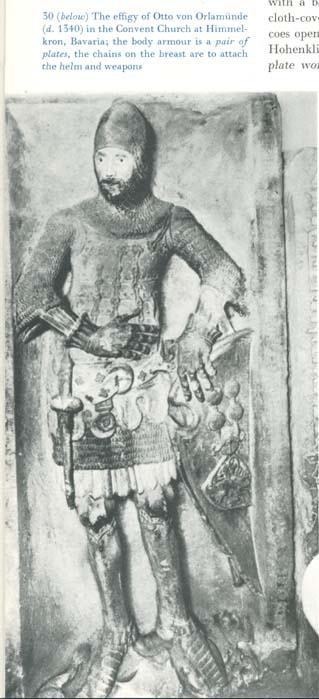
Count of Orlamunde
Attachment: 51.16 KB
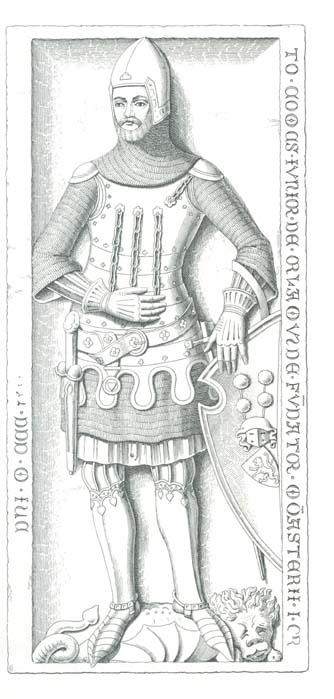
Drawing of Orlamunde effigy
Attachment: 52.61 KB

Landschaden effigy. Maybe a rondel?
Attachment: 57.24 KB
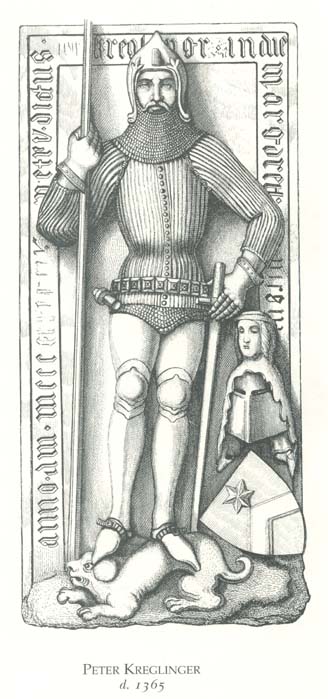
Kreglinger effigy - remains of a rondel
Attachment: 48.54 KBCount of Orlamunde
Attachment: 51.16 KBDrawing of Orlamunde effigy
Attachment: 52.61 KBLandschaden effigy. Maybe a rondel?
Attachment: 57.24 KBKreglinger effigy - remains of a rondel
Here are a couple more effigies/brasses.
Attachment: 27.57 KB

Aldeburgh brass
Attachment: 59.79 KB
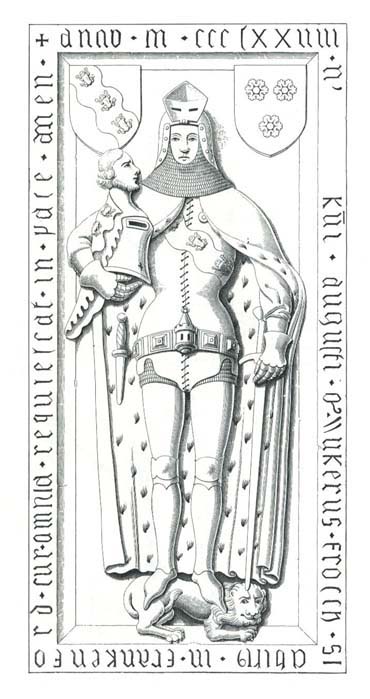
Weikhard Frosch. Unusual rondel
Attachment: 27.57 KBAldeburgh brass
Attachment: 59.79 KBWeikhard Frosch. Unusual rondel
I thumbed through basically all of my good picture-heavy books that contain items from this period. I found 1 "ballock" dagger from the 14th century not already shown here. The wooden hilt was a modern restoration, so I didn't bother scanning it. I found 1 rondel dagger not already shown here. It's below. It was dredged up from the Thames and is dated to the late 14th century.
I found other 14th century daggers, but they were quillon daggers (and variations), baselards, and those odd Burgundian heraldic daggers with the big hollow pommels.
I have a pretty decent library, and I just can't find much from the era. :\ It seems to be more common to see daggers of any kind on effigies in the 15th century than the 14th. Most of our surviving antique examples, especially rondels and ballocks, come from the 15th century and later.
Attachment: 9.76 KB

I found other 14th century daggers, but they were quillon daggers (and variations), baselards, and those odd Burgundian heraldic daggers with the big hollow pommels.
I have a pretty decent library, and I just can't find much from the era. :\ It seems to be more common to see daggers of any kind on effigies in the 15th century than the 14th. Most of our surviving antique examples, especially rondels and ballocks, come from the 15th century and later.
Attachment: 9.76 KBChad-
Thank you for all your effort - these examples are far better than what I had already.
Incidentally, I've found other examples of what might be the "unusual rondel" of the Weikhard Frosch effigy, in the Chroniques de France ou de St. Denis and the Life of Bertrand du Guesclin. These images are courtesy of the British Library. More to follow in a separate reply...
Attachment: 111.97 KB
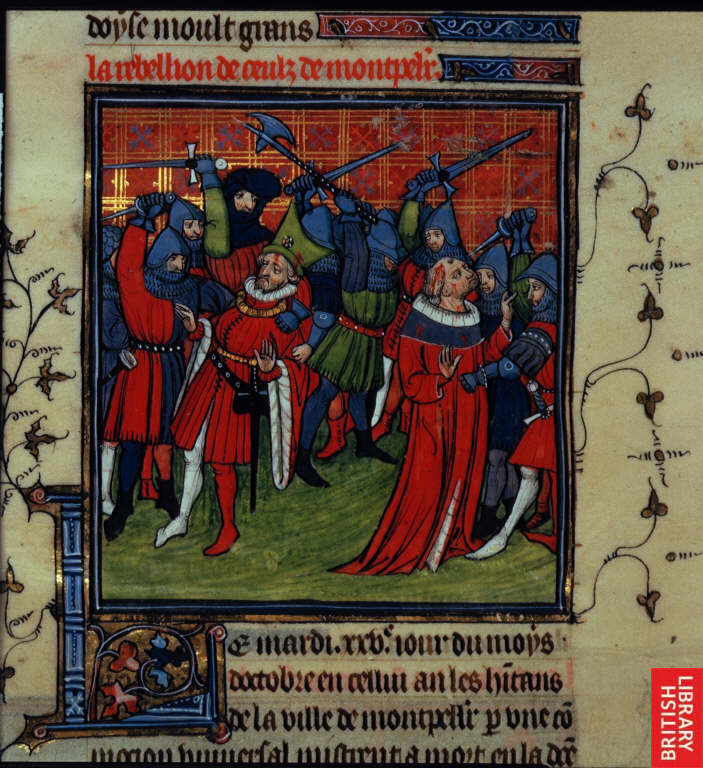
Chroniques de France: Daggers in raised hands. Perhaps not a rondel, given the bent form, but similar in form to the "unusual rondel". Note the scabbards, which also seem to have a round top to fit the rondel.
Attachment: 107.87 KB
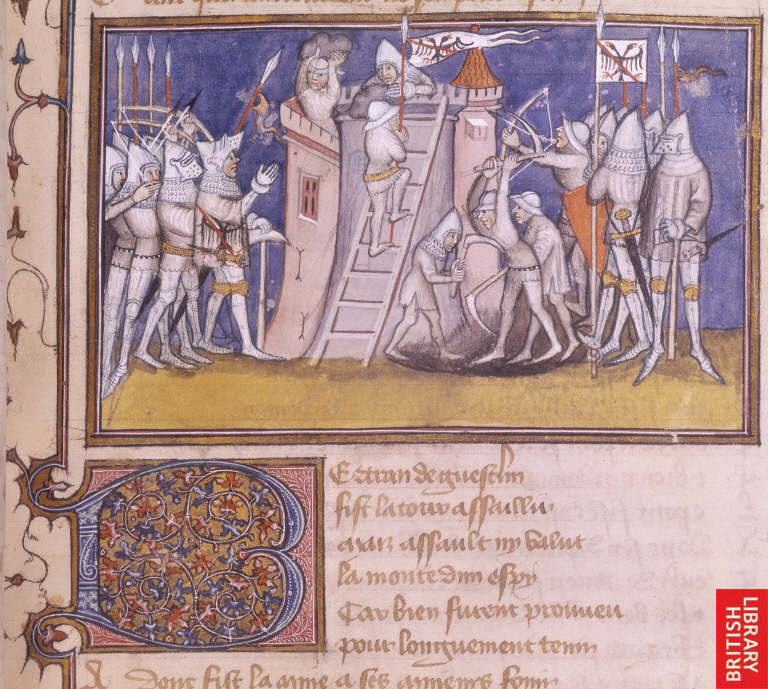
Life of Bertrand du Guesclin: at the side of du Guesclin on the left
Attachment: 105.89 KB
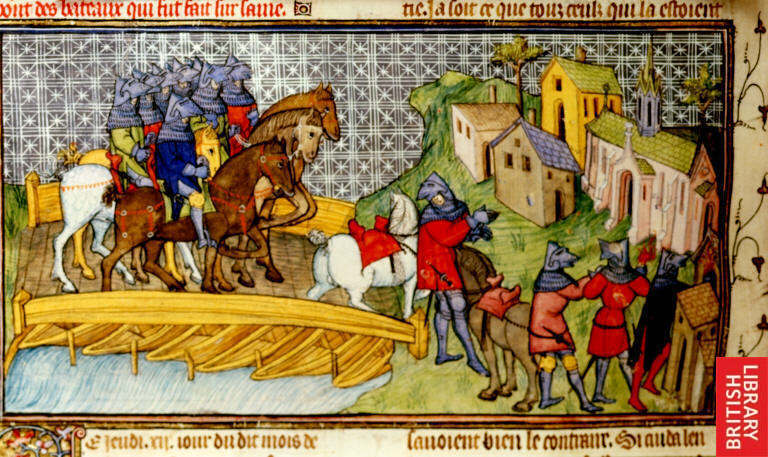
Chroniques de France: Daggers at sides of knights. More like classic rondels.
Thank you for all your effort - these examples are far better than what I had already.
Incidentally, I've found other examples of what might be the "unusual rondel" of the Weikhard Frosch effigy, in the Chroniques de France ou de St. Denis and the Life of Bertrand du Guesclin. These images are courtesy of the British Library. More to follow in a separate reply...
Attachment: 111.97 KBChroniques de France: Daggers in raised hands. Perhaps not a rondel, given the bent form, but similar in form to the "unusual rondel". Note the scabbards, which also seem to have a round top to fit the rondel.
Attachment: 107.87 KBLife of Bertrand du Guesclin: at the side of du Guesclin on the left
Attachment: 105.89 KBChroniques de France: Daggers at sides of knights. More like classic rondels.
A few more images, also from the Chroniques de France ou de St. Denis. Perhaps the illustrator knew of no other type, since this type of dagger seems to be the only type he includes? They look like they have a rondel guard, and a bulbous pommel. Perhaps an early relative of the rondel?
Attachment: 105.23 KB
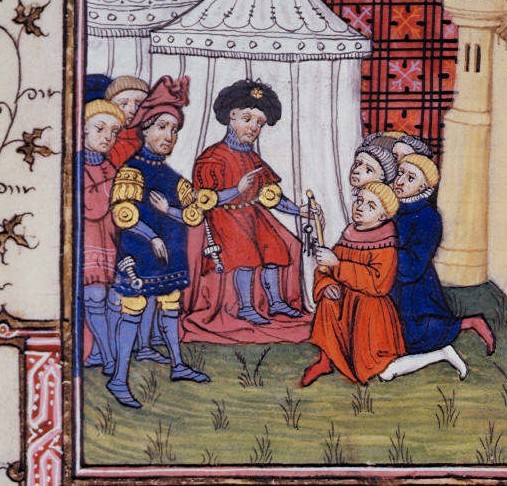
Chroniques de France: Most like the "unusual rondel", at the side of Duke d'Anjou and another official
Attachment: 112.57 KB

Chroniques de France: Another of the "unusual rondel" type?
Attachment: 105.23 KBChroniques de France: Most like the "unusual rondel", at the side of Duke d'Anjou and another official
Attachment: 112.57 KBChroniques de France: Another of the "unusual rondel" type?
| Paul Tompkins wrote: |
| A few more images, also from the Chroniques de France ou de St. Denis. Perhaps the illustrator knew of no other type, since this type of dagger seems to be the only type he includes? They look like they have a rondel guard, and a bulbous pommel. Perhaps an early relative of the rondel? |
There are a number of surviving rondel daggers with a rondel between grip and guard for a globular or other "pommel." They tend to be earlier, I think.
Page 1 of 1
You cannot post new topics in this forumYou cannot reply to topics in this forum
You cannot edit your posts in this forum
You cannot delete your posts in this forum
You cannot vote in polls in this forum
You cannot attach files in this forum
You can download files in this forum
All contents © Copyright 2003-2006 myArmoury.com — All rights reserved
Discussion forums powered by phpBB © The phpBB Group
Switch to the Full-featured Version of the forum
Discussion forums powered by phpBB © The phpBB Group
Switch to the Full-featured Version of the forum