While I'm definitely a HEMA guy I also like Japanese style blades.
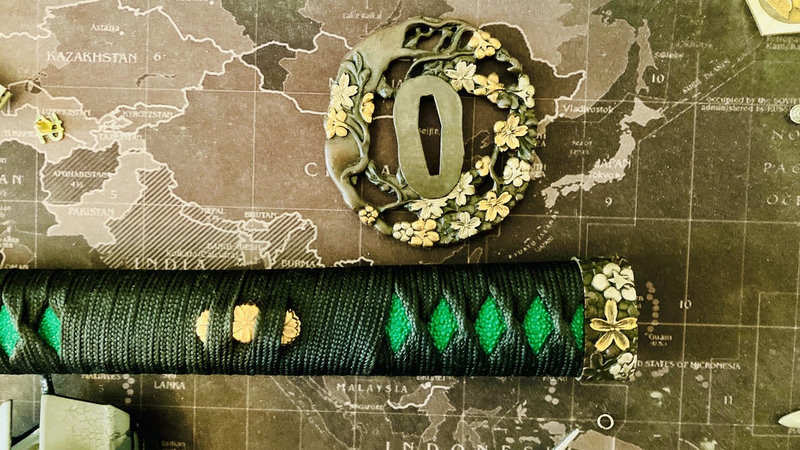
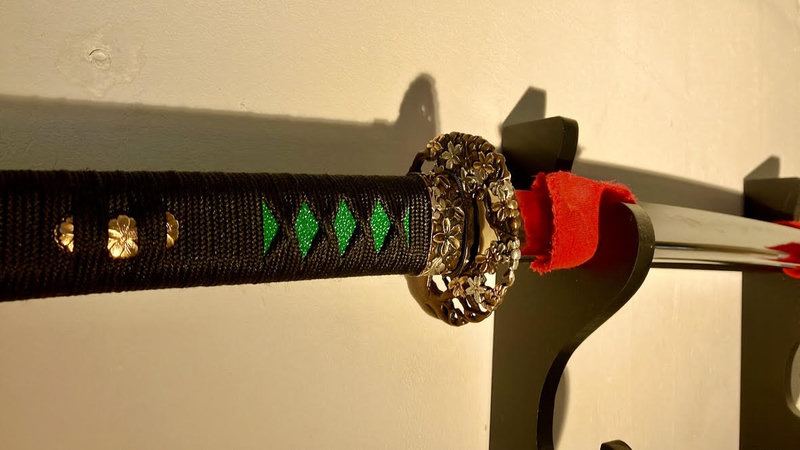
Because it's said that "the sword is the soul of the samurai" some time ago I decided to build a katana that would be appropriate for the person I am today.
I was 64 when I started this project and wanted to give it a sense of growth and flowering - also, because it's a deadly weapon death and rebirth -there's more but I leave that to the imagination.
I prefer subtlety to in-your-face symbolism.
I'm aware that most katanas don't carry such 'messages'...to each his own.
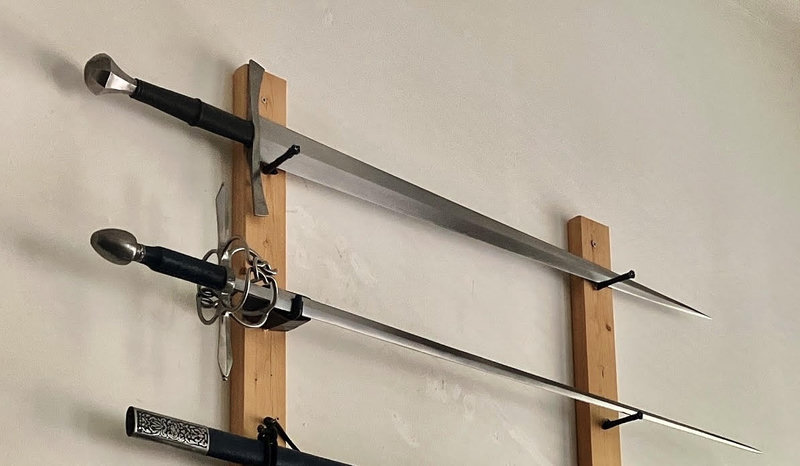
PIC 1 - Mind you the furniture is not a set, the similarity in style is a lucky coincidence.
The tsuka was made in China to my specifications, the brass tsuba was purchased from a Japanese seller.
After the deal was made the seller told me the tsuba's actually an Edo era antique but as I have no way to verify that I cannot be certiain and in any case, it's not important.
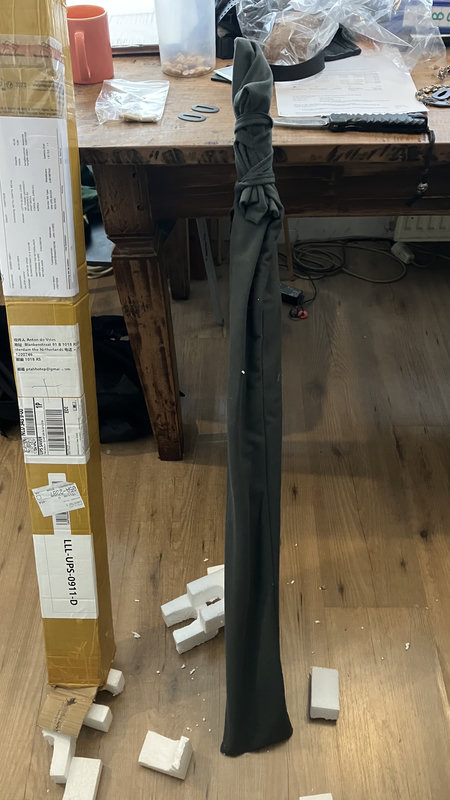
PIC 2 - I ran out of money and nothing happened for almost a year. When I could finally afford it I ordered a blade and saya made to my soecifications from sinosword dot com. We had a pleasant interaction - they're friendly and their English is good.
The blade arrived wrapped in a nice cotton sword bag, a pleasant surprise.
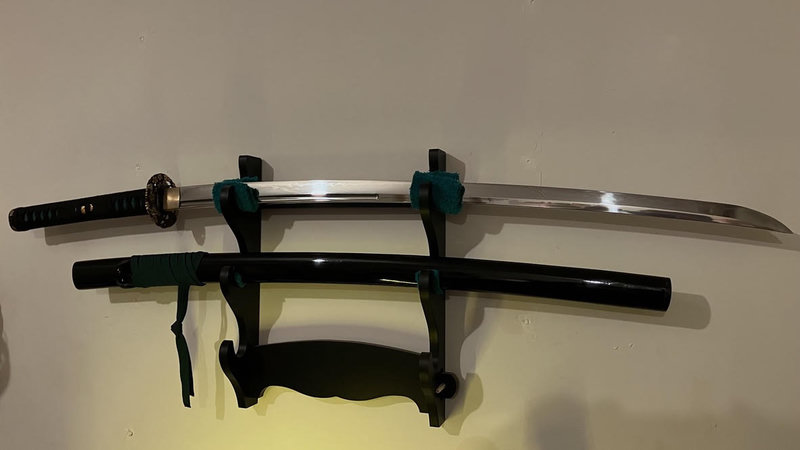
PIC 3 - Close-up of the assembled sword.
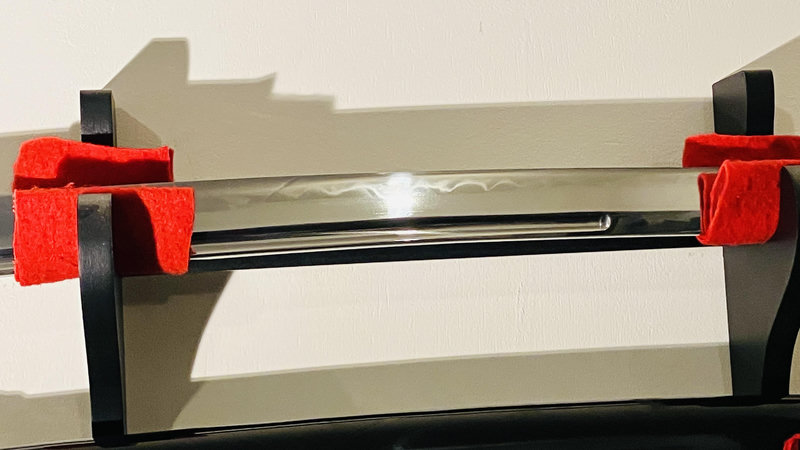
PIC 4 - Close-up of the blade. If I remember correctly traditional Japanese blades are folded because the steel isn't great - folded steel blades are beautiful but personally I believe proper steel is better. I lack expertise so I may very well be wrong. I chose T-10 steel for mine - it has a somewhat faint irregular hamon - as this is a mirror polish it's likely that the hamon would stand out more with a better polish. I'm considering clearing it up a bit but I have not made up my mind yet. I may decide to keep it as is - as I'm taller and stronger than the average Japanese I opted for a 31" blade instead of the 'normal' 28". - I also wanted a short fuller/bo-hi to make it slightly tip-heavy as I like that. Naginata style so to say. Uncommon but not unique.
Proper niku aka appleseed edge to prevent chipping. Shobu-zukuri as I'm not convinced a yokote is actually useful and they're difficult and expensive to do properly. Extra long tip as I like to stab opponents. (kidding)
PIC 5 - The sword isn't just what I wanted but actually exceeds my expectations. It's pleasantly noticeable heavier than the Cheness katana I used to have. The steel is better than the steel of my Albion Mercenary. There's a bit of flex but less than the Albion blade and I don't think I can bend it. While mainly for display the sword can be used for daily cutting exercises i.e. it's not really a wall-hanger.
I should add that I own an early Mercenary and Albion chose a better steel for their later swords I think.
It weighs 1120 grams as the Merc weighs 1340 I believe and is also a little shorter.
For combat (I hope that will never happen) I would choose the Mercenary as it's more versatile. Still, my HEMA skills easily translate to Japanese style blades - while the kat's curved and single-edge the swords are actually quite similar.
PIC 6 - I have not cut with it yet but am planning a cutting session next year with my swordfighting instructor and a few other people. Pool noodles and plastic bottles and such. Tatamis are too much of a hassle for me. I'm curious to see which of my swords cuts best - My rapier can probably do a pool noodle too and I'm eager to try that.
Not long ago a project like this would have been crazy expensive - nowadays the whole thing cost me about 300 euros. A complete katana of similar materials is cheaper - Folded/tahamagane and/or laminated blades and fancy furniture can rack up the price of course.
Follow-up plan : a companion tanto in similar style.
Like some samurai I'm not fond of the katana/wakizashi daisho.
I think the tanto is more effective than the wak in small spaces.
Like phone booths and such.
Unless the opponent's Clark Kent of course in which case it doesn't matter.
 Attachment: 56.62 KB
 Attachment: 37.21 KB
 Attachment: 59.21 KB
 Attachment: 62.78 KB
 Attachment: 79.63 KB
 Attachment: 139.85 KB