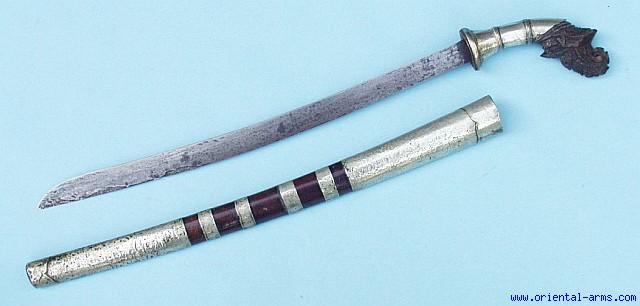
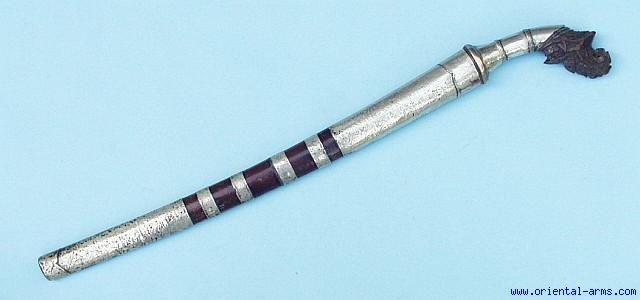
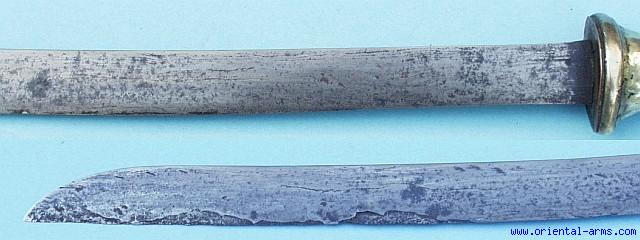
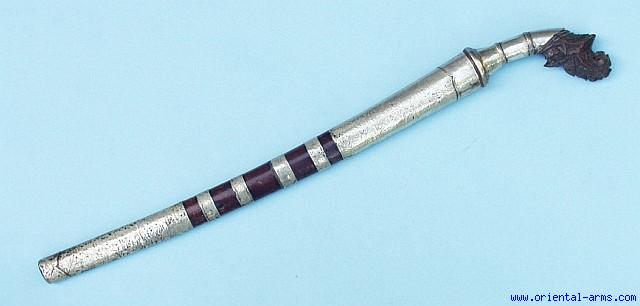
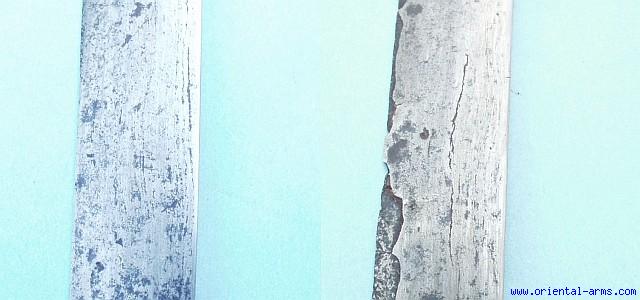
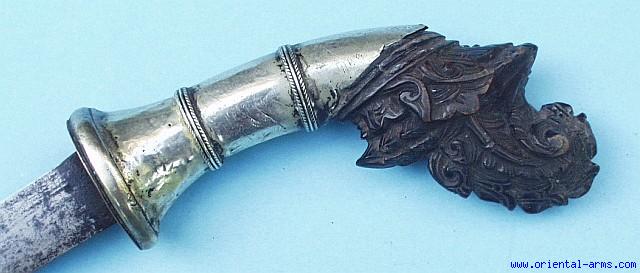
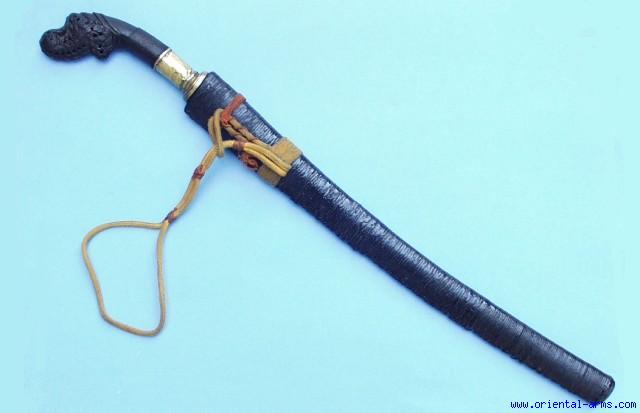
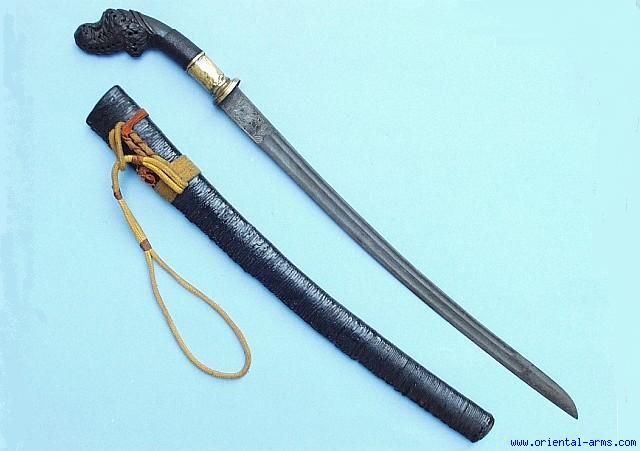
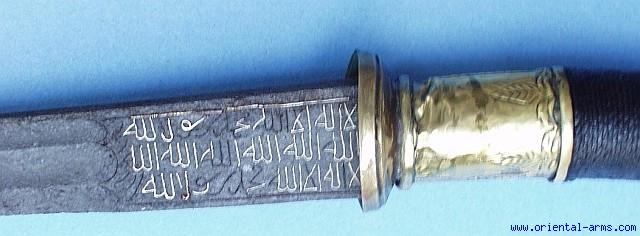
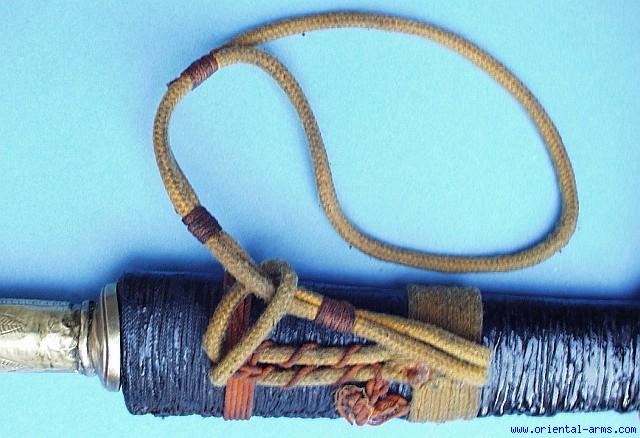
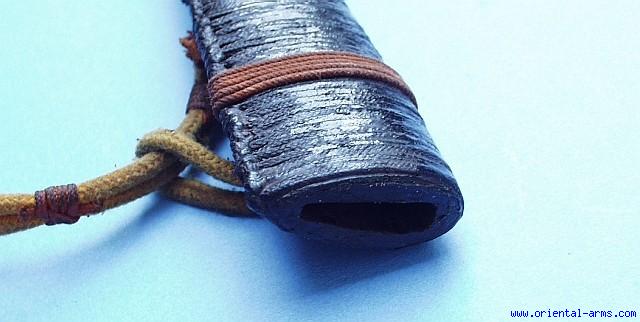
Look at the pattern of this wonderful sword.
Kind regards
Manouchehr
Courtesy of Alex Huangfu.
[ Download ]
[ Download ]
[ Download ]
[ Download ]
[ Download ]
[ Download ]
| Lafayette C Curtis wrote: |
| Which part of Indonesia does it come from, anyway? As you all know, mine is a pretty large country with a large number of martial cultures as well, so "Indonesian" doesn't really help much for definign the weapon's ethnographic provenance. Moreover, the weapon looks rather modern, or at least heavily influenced by Dutch or Chinese designs (or both) |


| Korey J. Lavoie wrote: |
| This is quickly becoming another one of my favorite weapon designs. They have a very nice air of understated elegance, can someone tell me who exactly used them? In regards to Social Class and what they where used for? I know I can't be the only one looking at the point and thinking of a Broken-Back Seax, even though that probably isn't the fairest comparison.
Thank you yet again Manouchehr. |
| Lafayette C Curtis wrote: |
| Ah. Palembang. It's probably a weapon from the early modern era, then--the decoration and everything looks like it comes from the 16th or 17th centuries. Which means it still qualifies as a genuine antique, just that the decoration and form is a little more "international" in style and less strikingly insular than weapons made even earlier. I take it the second example also comes from Sumatra? The profusion of metal elements on the scabbard is probably an Indian or Turkish influence, which is srongest there. |